TMJ Treatment In Des Moines
Find Relief From TMJ Pain
TMJ, short for temporomandibular joint, is the joint that connects your jaw to your skull, and it does more work than most people realize, moving every time you talk, chew, or yawn. When that joint isn't functioning properly, it can lead to pain, clicking, or stiffness that affects far more than just your jaw.
At ADIO Chiropractic Clinic, Dr. Jeffery Stickel focuses on restoring proper movement to the joint itself, not just easing the discomfort it's causing. Because the jaw works so closely with the neck and upper back, a full evaluation often looks at more than the jaw alone.
Ready to find relief? Request an appointment today.
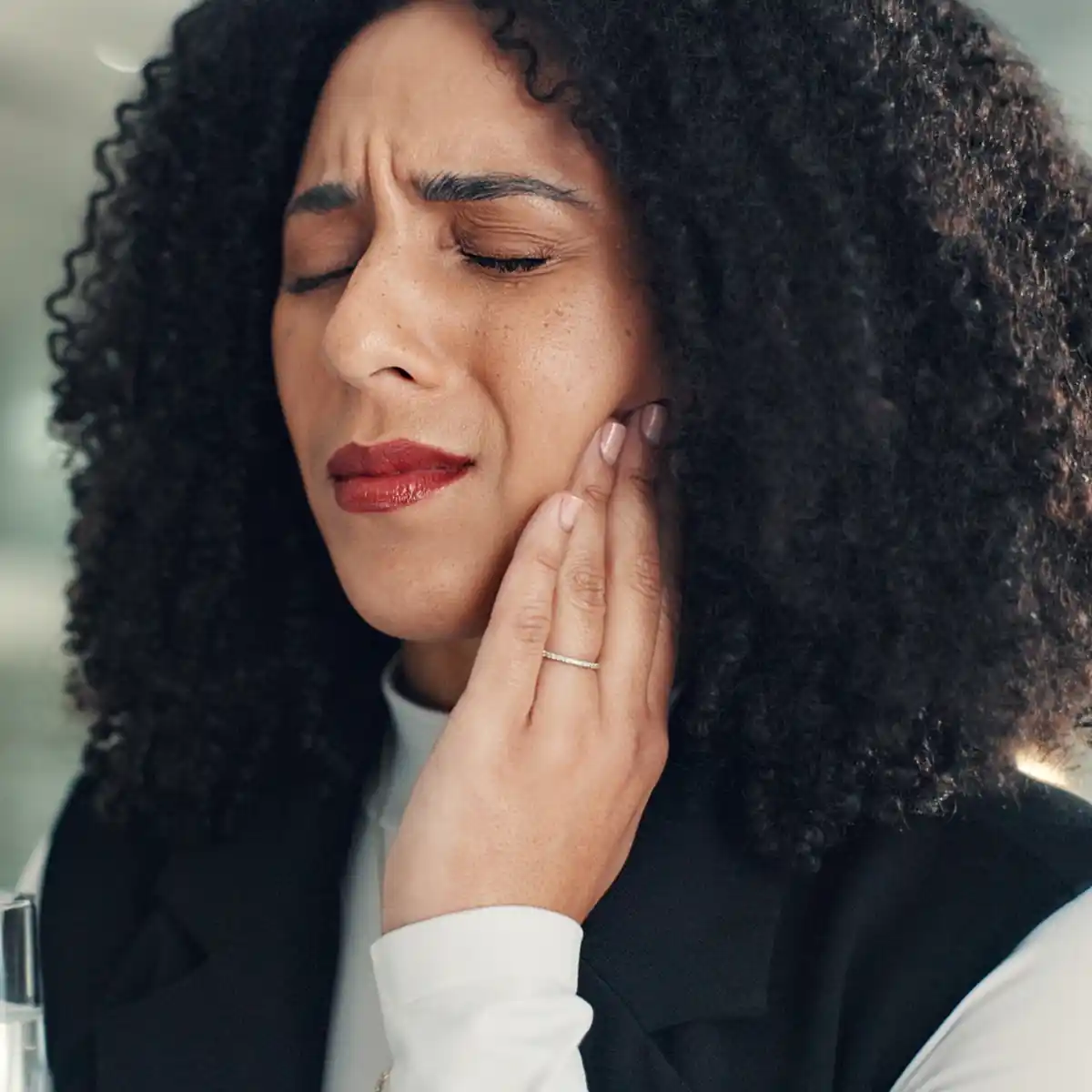
Understanding TMJ Disorder
How The Jaw Joint Actually Works
The temporomandibular joint, or TMJ, is a small but complex joint that combines a hinge motion with a sliding motion, which makes it especially prone to restriction and dysfunction. When that movement becomes uneven or restricted, it's often referred to as TMJ disorder, and it can create a surprising range of symptoms beyond jaw pain itself.
Signs You May Be Dealing With TMJ Disorder
TMJ disorder can show up in several different ways, and it's common for patients to experience more than one symptom at once.
- Clicking, popping, or grinding sensations when opening or closing the mouth
- Jaw pain or soreness, especially in the morning or after chewing
- Difficulty opening the mouth fully or a jaw that feels like it locks
- Headaches, particularly around the temples, linked to jaw tension
- Ear pain or a feeling of fullness in the ear without an actual ear infection
Because TMJ disorder can mimic other conditions, like ear infections or tension headaches, it's often overlooked as the actual source of the problem.
What Commonly Causes TMJ Disorder
TMJ disorder rarely comes from just one thing. More often, it's a combination of habits and physical factors working against the joint at once:
- Teeth grinding or jaw clenching, often related to stress or happening unconsciously during sleep
- Joint misalignment, where the jaw doesn't sit or move symmetrically
- Old injuries or trauma to the jaw or face
- Chronic muscle tension in the jaw, neck, or upper back that affects how the jaw moves
Because the jaw joint works so closely with the muscles in the neck and upper back, tension or restriction in those areas can directly contribute to TMJ symptoms, even when the jaw itself wasn't the original source of the problem.
TMJ Treatment Options At ADIO Chiropractic Clinic
At ADIO Chiropractic Clinic, TMJ disorder is treated with:
- Extremity Adjustments, a technique Dr. Stickel is specifically certified in, applied directly to the jaw joint to restore proper movement and relieve restriction
Because TMJ dysfunction is often connected to tension in the surrounding neck and upper back, Dr. Stickel will also evaluate that area during your visit and may recommend addressing it as part of a complete treatment plan.
Frequently Asked Questions
What does TMJ stand for, and what is TMJ disorder?
TMJ stands for temporomandibular joint, the joint connecting your jawbone to your skull. TMJ disorder refers to dysfunction in that joint that can cause pain, clicking, or restricted movement when talking, chewing, or opening your mouth.
Can TMJ disorder cause headaches or ear pain?
Yes. Because the jaw joint sits close to the ear and shares muscle connections with the temples and upper neck, TMJ disorder can refer pain into these areas. This is why some patients with TMJ dysfunction are initially evaluated for ear infections or tension headaches before the jaw itself is identified as the actual source.
Is teeth grinding related to TMJ disorder?
Yes. Teeth grinding, often called bruxism, places significant strain on the jaw joint and surrounding muscles, and it frequently contributes to or worsens TMJ symptoms. Many people grind their teeth unconsciously during sleep, which is why they wake up with jaw soreness or headaches without any clear cause.
Can chiropractic care really help with jaw pain?
Yes. Extremity adjustments, the same category of technique used for joints like the knee or shoulder, can be applied to the jaw to restore proper movement in the joint itself. Dr. Stickel holds a certification specifically in extremity adjusting, which includes this kind of joint-specific work.
How do I schedule an appointment with a TMJ chiropractor near me in Des Moines?
Scheduling is simple. Request an appointment online, and our team will follow up quickly to confirm your visit. We look forward to helping you find relief.