Cervical And Lumbar Decompression Therapy
Relieve Pressure On Your Spine With Decompression Therapy
When pressure builds up on the discs and nerves in your spine, it can lead to pain that spreads far beyond where the problem actually started. Decompression therapy gently stretches the spine to relieve that pressure, creating space for discs and nerves to heal and function the way they're supposed to, without surgery or medication.
At ADIO Chiropractic Clinic, Dr. Jeffery Stickel and Dr. Luis Amador-Gaxiola use both cervical and lumbar decompression therapy to treat pressure-related pain at its source, rather than just managing the symptoms that come with it. This approach is especially helpful for patients who've been told their pain is related to a bulging disc or pinched nerve.
If chronic back or neck pain has been holding you back, request an appointment today to see whether decompression therapy could help.
Why Spinal Pressure Causes So Much Pain
Understanding Cervical And Lumbar Decompression
The spine relies on discs to cushion the vertebrae and nerves to carry signals throughout the body. When those discs become compressed, whether from age, injury, or repetitive strain, they can bulge, herniate, or press directly on nearby nerves. That pressure is often what turns a simple ache into pain that radiates down an arm or leg, or that just won't go away no matter how much rest you get.
Decompression therapy addresses this directly by gently stretching the spine in a controlled, measured way. That stretch creates negative pressure within the disc space, which can help pull bulging or herniated material back into place and draw in fluids, nutrients, and oxygen that support the disc's natural healing process.
Cervical Versus Lumbar Decompression
At ADIO Chiropractic Clinic, we offer both types of decompression therapy, tailored to where a patient's pain originates:
- Cervical decompression targets the neck, relieving pressure on discs and nerves that can cause pain, numbness, or tingling radiating into the shoulders, arms, or hands
- Lumbar decompression targets the lower back, easing pressure that often contributes to pain radiating into the hips, legs, or feet
Dr. Stickel and Dr. Amador-Gaxiola will evaluate your specific symptoms and imaging, when available, to determine which approach, or combination of approaches, fits your situation.
Conditions Decompression Therapy Can Help
Decompression therapy is one of the most versatile tools we offer, and we frequently recommend it for patients dealing with:
- Sciatica, where pressure on the sciatic nerve causes pain radiating down the leg
- Chronic back pain that hasn't improved with rest or general adjustments
- Neck pain related to disc compression or nerve irritation
- Headaches and migraines linked to tension or pressure in the cervical spine
- Ongoing hip pain connected to lower back nerve irritation
- Lingering pain from auto injuries, work injuries, or sports injuries
If you've been told your pain is related to a bulging disc, pinched nerve, or spinal stenosis, decompression therapy is often one of the first non-surgical options worth exploring.
What To Expect During Treatment
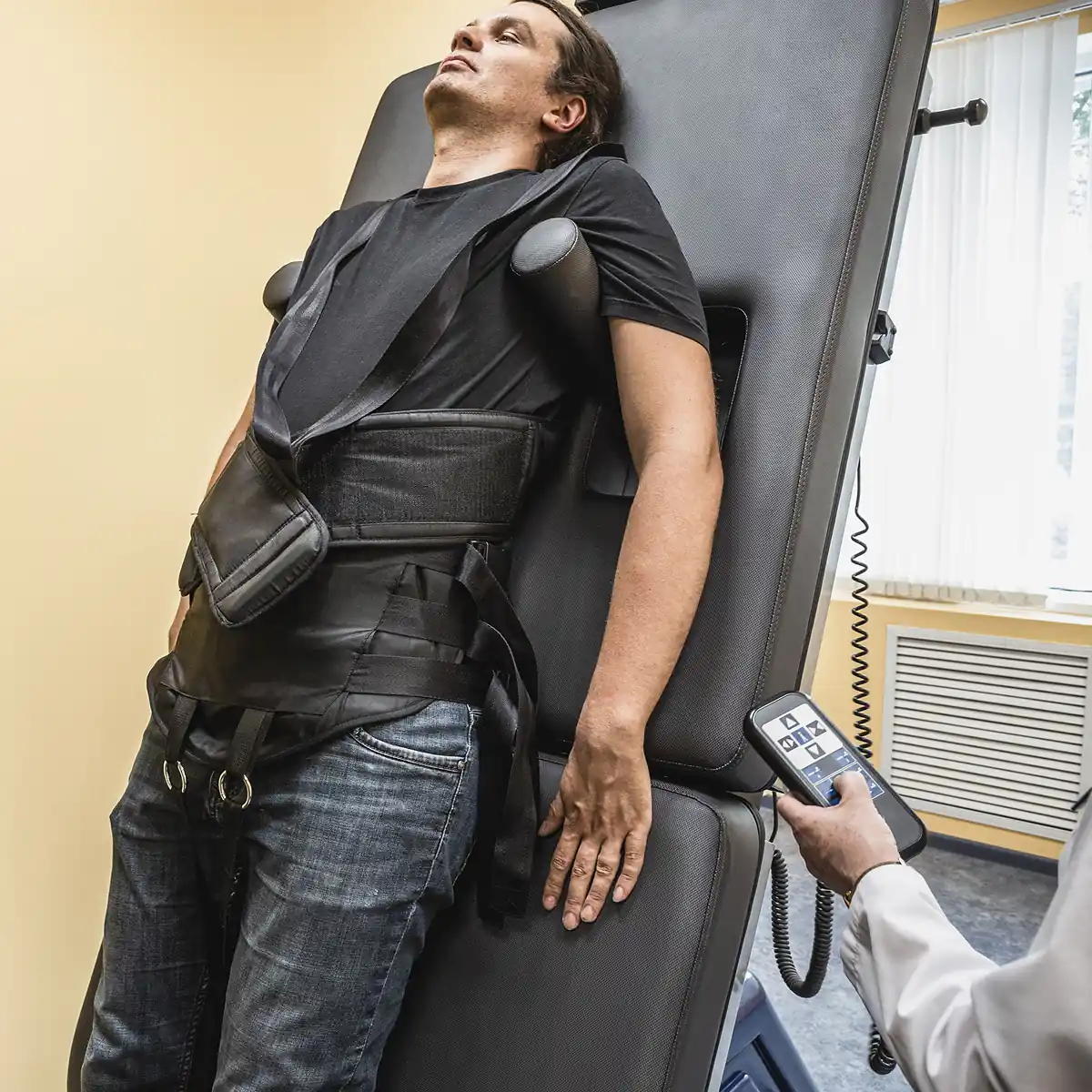
Decompression sessions are relaxed and controlled. You'll be positioned comfortably on a specialized table, which gently and gradually stretches the targeted area of your spine for a set period of time. Most patients find the sensation more relieving than uncomfortable, closer to a deep, therapeutic stretch than anything painful.
A typical course of care includes:
- An initial evaluation to confirm decompression therapy is appropriate for your condition
- A series of sessions, often scheduled multiple times per week early in treatment
- Regular reassessment to track progress and adjust your plan as needed
Because decompression therapy works gradually, most patients notice improvement building over several sessions rather than after just one visit.
Frequently Asked Questions
What is decompression therapy used for?
Decompression therapy is most often used to treat pain caused by pressure on spinal discs and nerves, including bulging or herniated discs, sciatica, and spinal stenosis. By gently stretching the spine, it creates space that can relieve pressure and support the body's natural healing process in the affected area.
What are the benefits of decompression therapy?
Patients often experience reduced pain, less numbness or tingling, and improved mobility as pressure on the affected discs and nerves is relieved. Because decompression therapy addresses the underlying pressure rather than just the resulting pain, results tend to be more lasting than temporary relief methods.
How much does decompression therapy cost?
The cost of decompression therapy depends on how many sessions your treatment plan requires, which is determined by the severity and location of your symptoms. During your evaluation, Dr. Stickel or Dr. Amador-Gaxiola will walk you through a recommended treatment plan and what to expect before you begin.
How do I schedule decompression therapy near me in Des Moines?
Scheduling is simple. Request an appointment online, and our team will follow up quickly to confirm your visit. We look forward to helping you find relief.